International order
Patterned relationships among units on the international level.

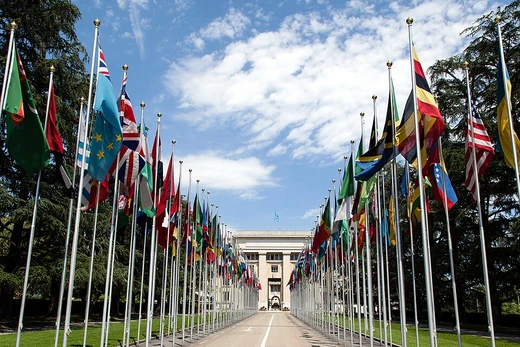
International order refers to patterned or structured relationships among actors on the international level. It encompasses both material and social components, with legitimacy—the generalized perception that actions are desirable, proper, or appropriate—considered essential to political orders. Various scholars have defined international order in terms of regularized practices, governing arrangements, or organized institutions that help govern interactions among states.
- field
- International relations
- key_concepts
- Patterned relationships, legitimacy, rules, institutions, norms
- related_scholars
- David Lake, Lisa Martin, Thomas Risse, Michael Barnett, George Lawson, John Mearsheimer, John Ikenberry, Jeff Colgan
- subtype
- Liberal international order (LIO)
- challengers
- Authoritarian states, illiberal states, populism, protectionism, nationalism
Lore & Background
International order is defined by scholars in multiple ways. David Lake, Lisa Martin, and Thomas Risse define 'order' as 'patterned or structured relationships among units.' Michael Barnett defines it as 'patterns of relating and acting' derived from and maintained by rules, institutions, law, and norms, with both material and social components. George Lawson defines it as 'regularized practices of exchange among discrete political units that recognize each other to be independent.' John Mearsheimer defines it as 'an organized group of international institutions that help govern the interactions among the member states.' John Ikenberry defines a political order as 'the governing arrangements among a group of states, including its fundamental rules, principles, and institutions.' Jeff Colgan characterizes international order as entailing multiple subsystems that can experience drastic change without fundamentally changing the order.
Reader's Guide
The liberal international order (LIO) is a specific type of international order based on political liberalism, economic liberalism, and liberal internationalism since the late 1940s. It entails international cooperation through multilateral institutions like the United Nations, World Trade Organization, and International Monetary Fund, and is constituted by human equality, open markets, security cooperation, promotion of liberal democracy, and monetary cooperation. The LIO was established after World War II, led largely by the United States. Its existence and nature are debated: John Mearsheimer argues it only arose after the Cold War, as it is practically possible only during unipolar moments, whereas the Cold War world was bipolar. The LIO has been credited with expanding free trade, increasing capital mobility, spreading democracy, promoting human rights, and collectively defending the West from the Soviet Union. It faces internal challenges from populism, protectionism, and nationalism, and external challenges from authoritarian and illiberal states, including China, Russia, and more recently the United States.
Did You Know?
- The United Nations has been characterized as a proxy for how states broadly perceive the international order.
- John Mearsheimer argues the liberal international order only arose after the end of the Cold War, not in the 1940s.
- Jeff Colgan characterizes international order as entailing multiple subsystems that can change drastically without fundamentally altering the order.
- The liberal international order is challenged internally by populism, protectionism, and nationalism within liberal states.
Frequently Asked Questions
What does 'international order' actually mean in IR?
It describes the structured, recurring patterns of interaction among states and other actors operating at the global level. Think of it as the underlying architecture—rules, norms, and institutions—that gives predictability to how countries behave toward one another.
Why is legitimacy considered central to international order?
Without a broad sense that the system's arrangements are proper and desirable, the rules and institutions lose their binding force. Legitimacy is what transforms a mere power arrangement into a recognized political order that actors willingly follow.
What is the liberal international order (LIO)?
The LIO is a specific subtype of international order built around principles like free trade, multilateral institutions, and the rule of law among democratic states. Scholars such as John Ikenberry and Lisa Martin have examined how this particular configuration emerged and functions.
Which scholars are most associated with studying international order?
Names like David Lake, Thomas Risse, Michael Barnett, and Jeff Colgan are frequently cited for shaping debates around how order is constructed, maintained, or disrupted. Realist voices such as John Mearsheimer offer contrasting perspectives on whether such order rests on shared norms or on power distribution.
What are the biggest threats to today's international order?
Authoritarian and illiberal states, rising nationalism, protectionist economic policies, and populist movements are widely identified as the principal challengers. These forces question the legitimacy of existing institutions and push for alternative governing arrangements.
More in International Relations And Concepts 1-18
Spotted an error? Know more?
This is a living reference — every entry is fact-audited, and reader corrections feed straight into our audit queue. Suggest an edit · See this site's audit record