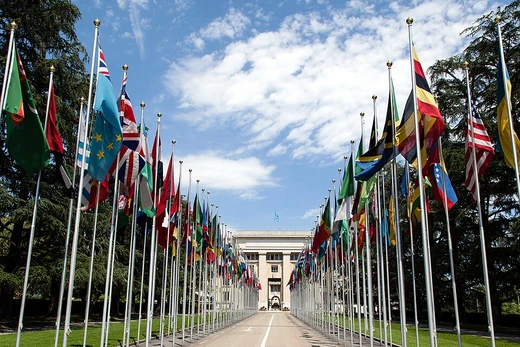
International relations theory
Theoretical frameworks explaining behaviors and outcomes in international politics.

International relations theory is the study of international relations from a theoretical perspective, seeking to explain behaviors and outcomes in international politics. The three most prominent schools of thought are realism, liberalism, and constructivism, with additional approaches including rational choice and post-positivist/reflectivist theories.
- field
- International relations theory
- known_for
- Realism, liberalism, constructivism, neorealism, neoliberalism, rational choice
- key_thinkers
- Kenneth Waltz, E. H. Carr, Hans Morgenthau, Robert Keohane, Joseph Nye, Alexander Wendt, John Ruggie, Martha Finnemore, Michael N. Barnett, James Fearon, Bruce Bueno de Mesquita
Lore & Background
International relations as a discipline is believed to have emerged after World War I with the establishment of a Chair of International Relations, the Woodrow Wilson Chair held by Alfred Eckhard Zimmern at the University of Wales, Aberystwyth. The modern study of international relations theory has sometimes been traced to realist works such as E. H. Carr's The Twenty Years' Crisis (1939) and Hans Morgenthau's Politics Among Nations (1948). The most influential IR theory work of the post-World War II era was Kenneth Waltz's Theory of International Politics (1979), which pioneered neorealism.
Early international relations scholarship in the interwar years focused on the need for the balance of power system to be replaced with a system of collective security, with thinkers later described as 'Idealists.' The leading critique of this school was the realist analysis offered by Carr. A more recent study by David Long and Brian Schmidt in 2005 offers a revisionist account, claiming the history of the field can be traced back to late 19th century imperialism and internationalism, and that the 'great debates' framework does not correspond with historic evidence.
Realism has been the dominant theory since the discipline's conception, with main tenets of statism, survival, and self-help. Neorealism, or structural realism, contends that the effect of structure must be taken into account in explaining state behavior. Liberalism holds that state preferences are the primary determinant of state behavior, allowing for plurality in state actions. Constructivism emerged as a prominent third framework during the late 1980s and 1990s, and rational choice approaches became increasingly influential in the 1990s.
Reader's Guide
International relations theory matters because it provides the foundational frameworks for understanding and analyzing the behavior of states and other actors in the international system. The three main schools—realism, liberalism, and constructivism—offer distinct lenses: realism emphasizes state-centric power struggles in an anarchic system; liberalism focuses on state preferences and the role of institutions and non-state actors; constructivism highlights the importance of ideas, norms, and identities. Neorealism and neoliberalism refined these traditions, while rational choice approaches introduced formal modeling of conflict and cooperation. The field's history includes a traditional narrative of a 'great debate' between idealists and realists, but revisionist scholarship challenges this account, pointing to earlier roots in colonial administration and race science. The diversity of theories—from positivist/rationalist to post-positivist/reflectivist—reflects ongoing debates about methodology and the nature of international politics itself.
Did You Know?
- The three most prominent schools of thought in international relations theory are realism, liberalism, and constructivism.
- The most influential IR theory work of the post-World War II era was Kenneth Waltz's Theory of International Politics (1979), which pioneered neorealism.
- A revisionist account by David Long and Brian Schmidt (2005) claims that the history of the field can be traced back to late 19th century imperialism and internationalism.
- Rational choice approaches to world politics became increasingly influential in the 1990s, with works by James Fearon and Bruce Bueno de Mesquita.
More in International Relations And Concepts 1-18
Spotted an error? Know more?
This is a living reference — every entry is fact-audited, and reader corrections feed straight into our audit queue. Suggest an edit · See this site's audit record